

Low back pain is often recurrent, and the reason why it can feel like a mystery, especially when you’re not even sure what caused it in the first place.
One of the most common stories we hear goes something like this:
“I went to bed feeling completely fine, and I woke up feeling like I broke my back in my sleep.”
The episode lasts a few days. Maybe Advil, ice, or heat gets you through it. Maybe you get an adjustment or an oral steroid from your doctor. Then, almost as quickly as it appeared, the pain settles down and a week later you feel like yourself again.
Now that the pain is out of sight, it’s out of mind. You go right back to normal life.
Until it happens again.
So, let’s break down what may actually be happening.
| Back Pain Recurrence Overview Recurring back pain may seem to appear overnight, but earlier signs such as stiffness, minor aches, discomfort in certain positions, or intermittent hip or leg symptoms can appear before a flare-up. Treatments such as medication, heat, ice, massage, or adjustments may relieve symptoms without identifying what triggered them. A thorough, one-on-one evaluation can examine how symptoms respond to movements and positions, helping patients recognize warning signs, understand their mechanical pattern, and learn practical ways to manage symptoms and stay active. |
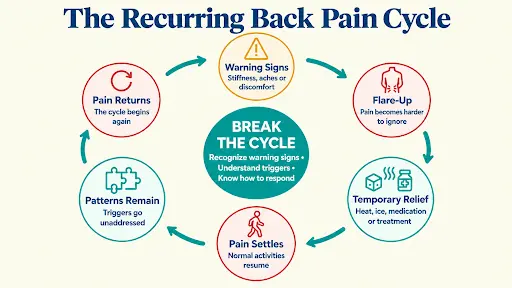
The Recurring Back Pain Cycle
Recurring back pain can follow a familiar cycle: early warning signs appear, symptoms flare up, temporary relief helps, and normal activities resume. However, when the movements, positions, habits, or mechanical patterns contributing to the pain remain unaddressed, the symptoms may return.
Your Back Pain Probably Didn’t Start Overnight
In many cases, the problem didn’t actually begin the night you woke up in pain. There may have been clues leading up to that episode that were easy to overlook.
Maybe it was occasional stiffness or minor aches. Maybe certain positions had started bothering you. Maybe you noticed intermittent symptoms in your hips or legs. At the time, none of those things seemed significant enough to pay attention to.
And please don’t automatically chalk it up to getting older.
While our bodies certainly change with age, recurrent back pain shouldn’t simply be accepted as something you have to live with. Sometimes those seemingly insignificant symptoms can give us valuable information about what your body is responding to long before a bigger flare-up occurs.
Feeling Better Isn’t Always the Same as Solving the Problem
Adjustments, medications, heat, ice, massage, and other treatments may provide much-needed symptom relief. And relief matters—you need to be able to work, sleep, exercise, take care of your family, and live your life.
But reducing your symptoms doesn’t necessarily tell you why they happened in the first place.
If the pain goes away but you never understand what movements, positions, habits, or mechanical patterns contributed to it, it can be difficult to know what to change—or what to do when you feel those first warning signs again.
That’s where a more thorough evaluation becomes important.
You Have to Look Beyond Where It Hurts
Recurrent back pain deserves more than a cookie-cutter exercise program based solely on the fact that your low back hurts.
A thorough evaluation should look at the whole picture: your symptoms, daily routines, work demands, exercise, sleep, previous injuries, what makes your pain better or worse, and—most importantly—how your symptoms respond to movement.
At Revive Spine and Sport, that means looking beyond where it hurts.
We want to know which movements change your symptoms. Which positions make them better or worse? What happens when we repeatedly test specific movements? Do your symptoms move farther away from your spine, or do they begin moving back toward it?
Those responses give us valuable clues about the mechanical pattern behind your pain.
That’s also why one-on-one care matters. When you’re dealing with a recurrent problem, your provider needs the time to assess, reassess, ask questions, watch how your body responds, and adjust the plan based on you—not simply hand you the same low-back exercise sheet given to everyone else.
The Goal Isn’t Just to Get You Through the Next Flare-Up
If your back pain keeps returning, the answer isn’t necessarily another temporary fix.
The goal should be understanding why your symptoms behave the way they do, learning which movements and positions your body responds to, recognizing the early warning signs, and knowing what you can do when symptoms start to appear.
Because ultimately, we don’t want you dependent on us either.
At Revive Spine and Sport in New Braunfels, Texas, our goal isn’t simply to get your pain to calm down. We want to help you understand your body and give you the tools to manage your symptoms, stay active, and feel confident knowing what to do if they ever start creeping back in.
Your back pain shouldn’t have to remain a mystery.
Frequently Asked Questions
Why does my back pain keep returning?
Back pain may return when the movements, positions, habits, or mechanical patterns contributing to symptoms have not been identified or addressed. Symptom relief can help you feel better, but it does not always explain why the flare-up occurred or what to change.
Can recurring back pain really begin overnight?
It may feel sudden, but the problem may have been developing before the painful episode. Earlier clues can include stiffness, minor aches, discomfort in certain positions, or intermittent symptoms in the hip or leg.
Does pain going away mean the problem is solved?
Not necessarily. Medications, heat, ice, massage, adjustments, and other treatments may reduce symptoms, but lasting confidence comes from understanding what provokes or relieves them and how to respond to early warning signs.
Is recurring back pain simply part of getting older?
Although bodies change with age, recurring back pain should not automatically be dismissed as an unavoidable part of aging. A thorough evaluation may reveal movement- or position-related patterns that can guide a more individualized plan.
What should a thorough back pain evaluation include?
It should consider your symptoms, daily routines, work demands, exercise, sleep, previous injuries, aggravating and relieving factors, and how your symptoms respond to repeated movements and different positions.
Why should a provider look beyond the area that hurts?
The location of pain does not always tell the whole story. Examining movement and symptom responses can provide clues about the mechanical pattern behind the pain and help avoid a one-size-fits-all exercise program.
How can one-on-one care help with recurring back pain?
One-on-one care gives the provider time to assess, reassess, ask questions, observe how your body responds, and adjust the plan around your individual symptoms rather than relying on the same low-back exercise sheet for everyone.
What is the long-term goal of care for recurring back pain?
The goal is not only to calm the next flare-up. It is to help you understand your body, recognize early warning signs, learn which movements or positions may help, stay active, and feel more confident managing your symptoms.